Olive Pomace Valorization: Secondary Revenue for Mills
How an enzyme supplier for olive oil extraction helps olive oil mills turn wet pomace into better residual oil recovery, cleaner handling, and practical secondary revenue.
Request pricing How an enzyme supplier for olive oil extraction helps olive oil mills turn wet pomace into better residual oil recovery, cleaner handling, and practical secondary revenue.
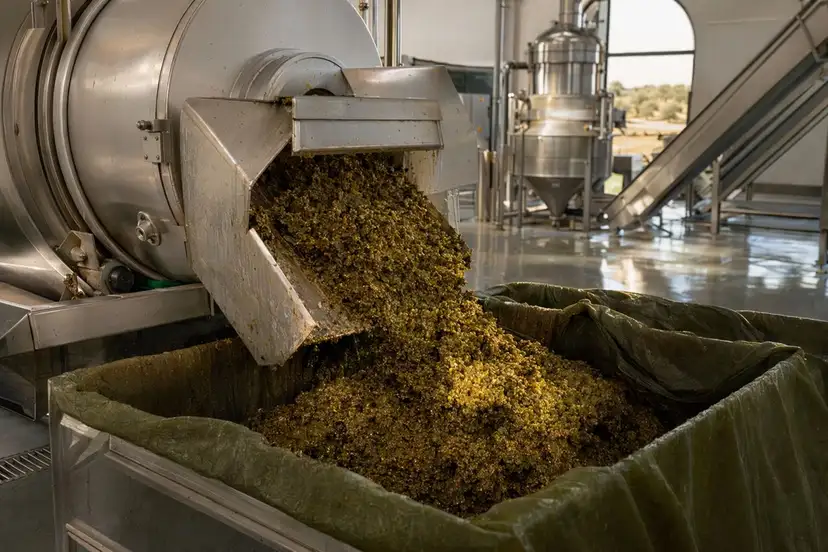
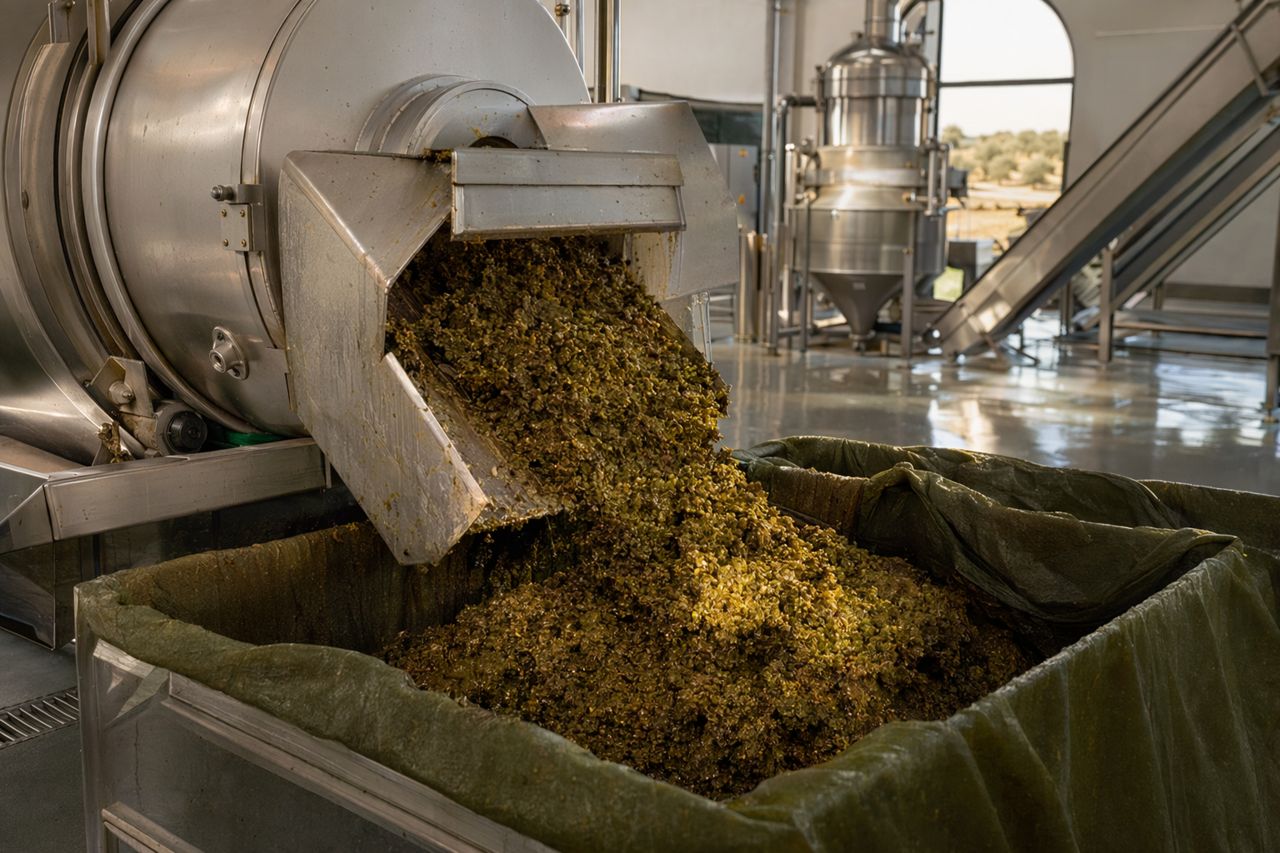
Request pricingFor many olive oil mills, pomace is treated as the material left after the real work is done. It is wet, fibrous, bulky, seasonal, and often expensive to move. But the mills that manage pomace well see it differently: as a second process stream that can protect margin during a harvest window where every hour matters.
Pomace valorization does not mean turning a mill into a chemical plant. It means improving how the remaining solids, water, and oil behave after primary extraction so the material is easier to separate, transport, stabilize, or route into a secondary revenue channel.
That is where enzyme strategy can help. As an enzyme supplier for olive oil extraction, Olivanta focuses on the operational point where paste structure, residual oil, moisture behavior, and downstream handling meet.
After crushing, malaxation, and centrifugal separation, a portion of the oil can remain trapped in plant tissue, fine solids, and emulsified phases. The exact level depends on cultivar, maturity, weather, crusher configuration, malaxation conditions, decanter setup, and how aggressively the mill is running during peak intake.
Pomace can carry value in several forms:
The commercial issue is not only how much value is present. It is whether the pomace stream is consistent enough to process economically.
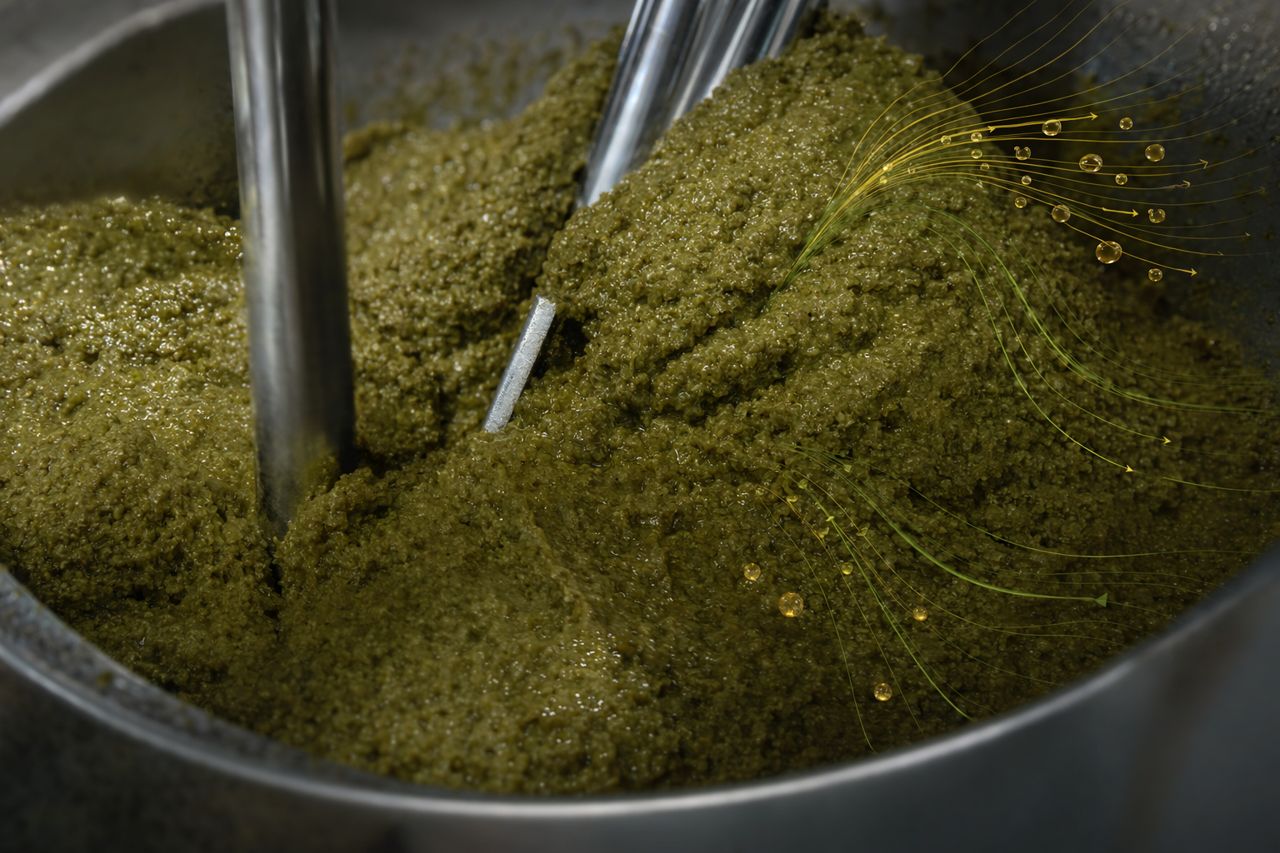
Olive paste and pomace are structured materials. Pectin, hemicellulose, cellulose fragments, cell wall residues, proteins, mucilage, and fine solids all influence how oil droplets move, how water binds, and how the mass separates.
A properly selected enzyme program can help condition this structure. In practical mill language, the goal is to make the material less locked-up and more cooperative.
For pomace valorization, enzyme support may help mills target:
This is not about chasing a laboratory number. It is about making the plant run with fewer surprises and more recoverable value.
Pomace valorization begins before pomace exists. If the primary extraction line is unstable, the downstream stream will be unstable too.
A mill looking at secondary revenue should first review:
Olivanta enzyme programs are designed around this full process picture. A product that helps one mill improve paste release may need adjustment for another mill running a different cultivar mix, two-phase decanter, or high-moisture fruit.
Pomace valorization can take different forms depending on the mill, region, and partner network. The right route is usually determined by equipment access, transport distance, energy cost, and local buyer demand.
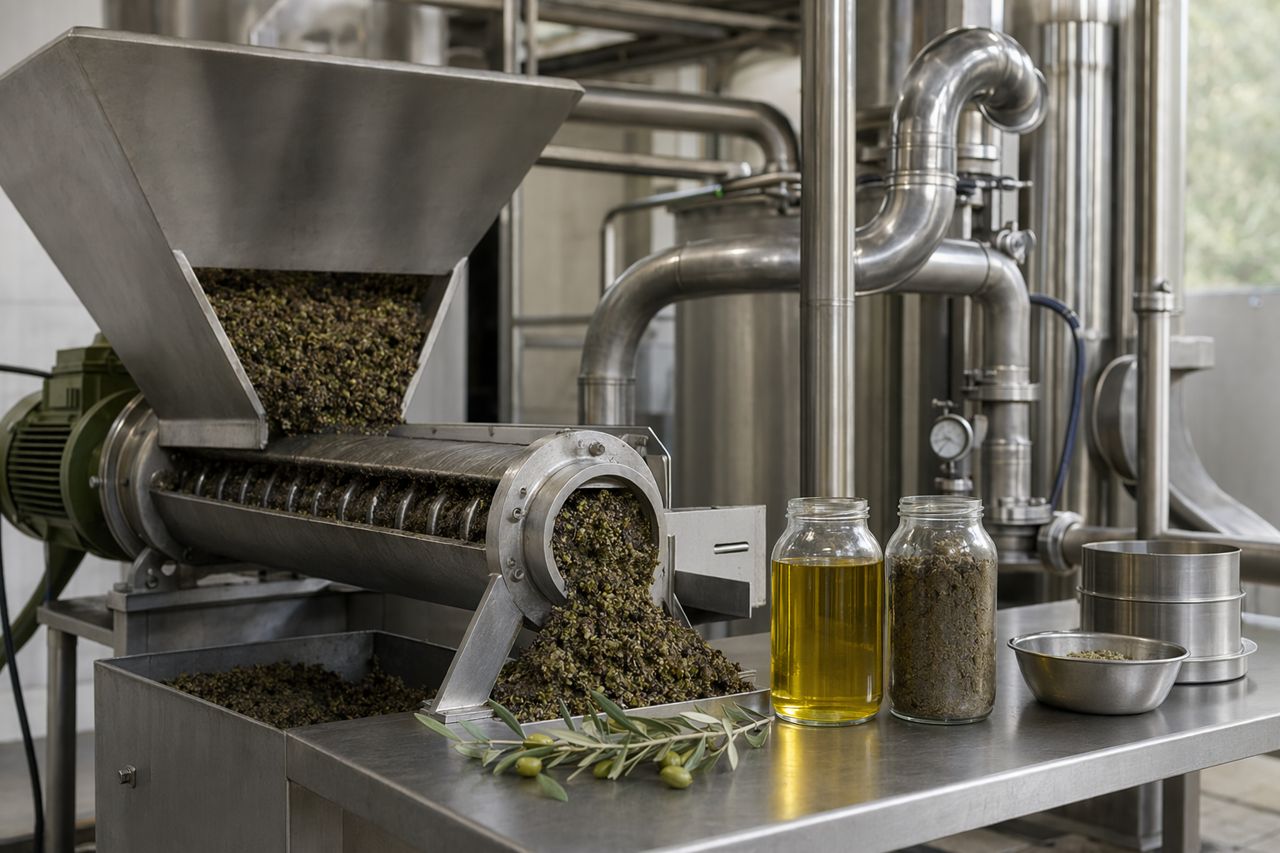
Secondary extraction is often the first revenue opportunity mills consider. If residual oil is commercially recoverable, improved pomace conditioning can support better separation and reduce the amount of oil leaving in the solid fraction.
Enzymes can be used to help loosen plant matrix structure and support cleaner release during a controlled secondary process. The value is strongest when the mill can measure oil loss, manage residence time, and keep the stream moving without bottlenecks.
Wet pomace costs money. It is heavy to haul, difficult to store, and can create odor, runoff, and stability problems. Even when a mill is not pursuing secondary oil recovery, better pomace handling can reduce operational friction.
Enzyme-assisted conditioning may help create a more predictable material for pressing, pumping, or drying, depending on the system. For managers, that can mean fewer stoppages, less manual intervention, and more consistent discharge during the busiest weeks of harvest.
Many mills route pomace into compost or soil amendment programs. In these cases, the objective is not maximum oil release alone. It is a more manageable organic stream that can be blended, aerated, and stabilized.
Pomace composition, moisture, polyphenol load, and local agronomic rules all matter. Enzymes may support earlier conditioning of fibrous material, but the full program should be built with the compost operator or agronomy partner.
Where infrastructure exists, olive pomace may be considered for biogas or other biomass applications. High solids, variable moisture, and inhibitory compounds can make the stream challenging. Enzymatic conditioning can be part of a broader pretreatment strategy when the goal is a more accessible organic substrate.
This route requires site-specific evaluation. The strongest projects align mill seasonality with storage, blending, and digester requirements.
Pomace valorization should be judged like any other mill improvement: by throughput, reliability, recovered value, and operating cost.
A practical evaluation should ask:
The best enzyme plan is one that fits into harvest reality. It should not require fragile handling or distract operators from oil quality, temperature control, and daily throughput.
Olivanta works with olive oil mills that want enzyme support grounded in production conditions, not generic claims. We start with the process: fruit profile, line layout, decanter type, pomace discharge, target revenue route, and current pain points.
From there, we help define a practical enzyme approach for the mill’s operating window. That may involve primary paste conditioning, secondary pomace processing, or a staged plan that improves extraction and downstream consistency together.
Our focus areas include:
Pomace will always be part of olive oil production. The question is whether it remains a disposal burden or becomes a managed stream with measurable value.
For mills under harvest pressure, the opportunity is clear: improve release, reduce variability, clean up handling, and make secondary processing more predictable.
If your mill is reviewing residual oil recovery, pomace dewatering, compost partnerships, or bioenergy options, Olivanta can help assess where an enzyme program may fit.
Ready to discuss your pomace stream? Request a quote through the on-site form and share your mill configuration, fruit profile, and valorization target.
Tell us your application and volume — we reply with pricing and lead time.