Two-Phase vs Three-Phase Olive Oil Mills | Olivanta
Compare two-phase and three-phase olive oil mills through yield, paste behavior, separation clarity, wastewater load, and enzyme-supported extraction consistency.
Request pricing Compare two-phase and three-phase olive oil mills through yield, paste behavior, separation clarity, wastewater load, and enzyme-supported extraction consistency.
Request pricingTwo-phase and three-phase olive oil mills are built around the same objective: move fruit through the line quickly, release as much oil as the crop allows, and keep separation clean under harvest pressure.
The difference is how each system handles water, pomace, wastewater, and decanter behavior. For mill managers, the choice affects daily operation as much as capital layout: paste consistency, malaxer response, decanter stability, oil clarity, waste handling, and how often the crew has to intervene when fruit condition changes.
Olivanta supports mills with enzyme solutions designed for extraction performance, paste management, and more consistent separation. As an enzyme supplier for olive oil extraction, we focus on the operational realities that matter during the season: throughput, yield opportunity, reduced stubborn emulsions, and reliable line behavior.
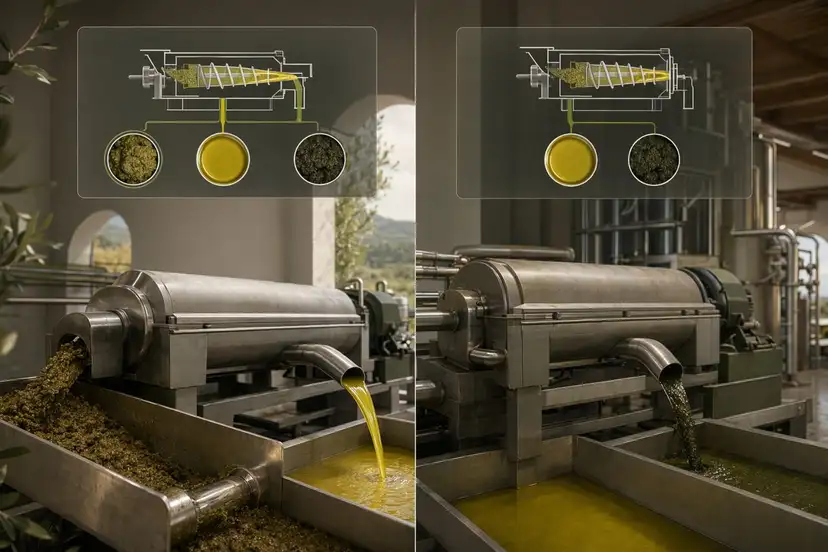
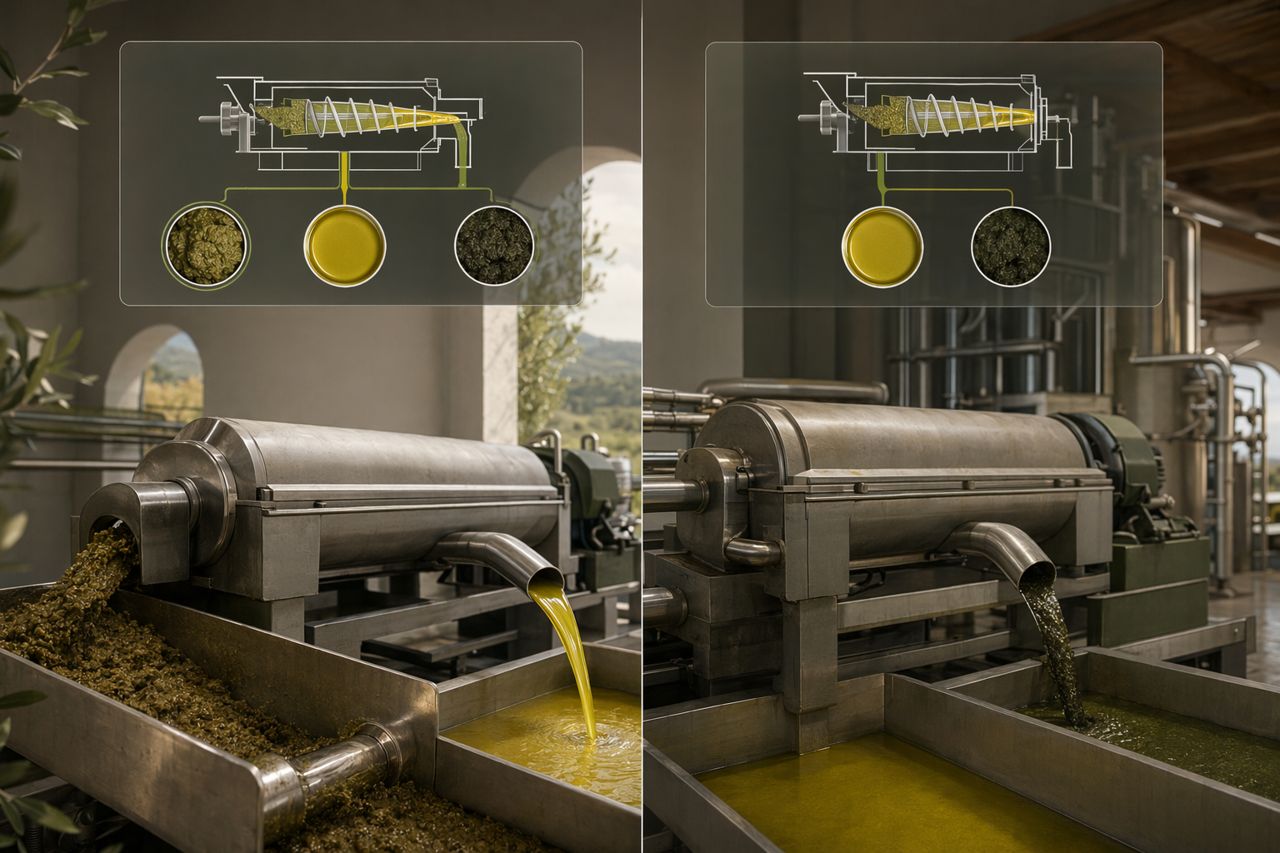
A two-phase mill generally uses little or no dilution water before decanting. The decanter separates the incoming olive paste into oil and a wet pomace stream containing vegetation water and solids.
A three-phase mill uses added water to help separate the paste into three streams: oil, vegetation water, and pomace.
That single process difference shapes most of the tradeoffs.
Neither system is automatically better. The best configuration depends on fruit variety, maturity, harvest speed, malaxation strategy, decanter design, disposal routes, and the mill’s commercial priorities.
Yield is not only a decanter question. It starts with the olive condition entering the crusher and continues through paste formation, malaxation, oil droplet release, and separation behavior.
Two-phase systems can perform strongly when paste structure is well managed. Because less water is added, the process can preserve concentration and reduce dilution effects. The challenge is that difficult pastes may become dense, sticky, or slow to release oil cleanly.
Three-phase systems can make paste flow easier by adding water, which may help decanter stability. The tradeoff is that excess or poorly controlled dilution can carry value away into the water stream and increase the burden on wastewater management.
Enzyme support helps by targeting paste behavior before the decanter. The goal is not to force the line; it is to improve oil release, reduce persistent emulsions, and help the decanter receive a more cooperative feed.
Waste handling is one of the clearest differences between the two systems.
Two-phase mills reduce liquid effluent but produce wetter pomace. This can be an advantage where wastewater treatment is constrained, but it requires a plan for wet pomace storage, transport, drying, composting, or secondary recovery.
Operationally, the wet pomace stream can also tell you a lot about the line. If oil is visibly retained, if pomace texture is inconsistent, or if decanter torque becomes unstable, the paste may need adjustment upstream.
Three-phase mills generate a larger vegetation water stream. That can simplify pomace handling but increases liquid waste volume, treatment demand, hauling requirements, and environmental pressure.
For mills operating near disposal limits, the extra water load is not a side issue. It becomes a harvest-season capacity constraint.
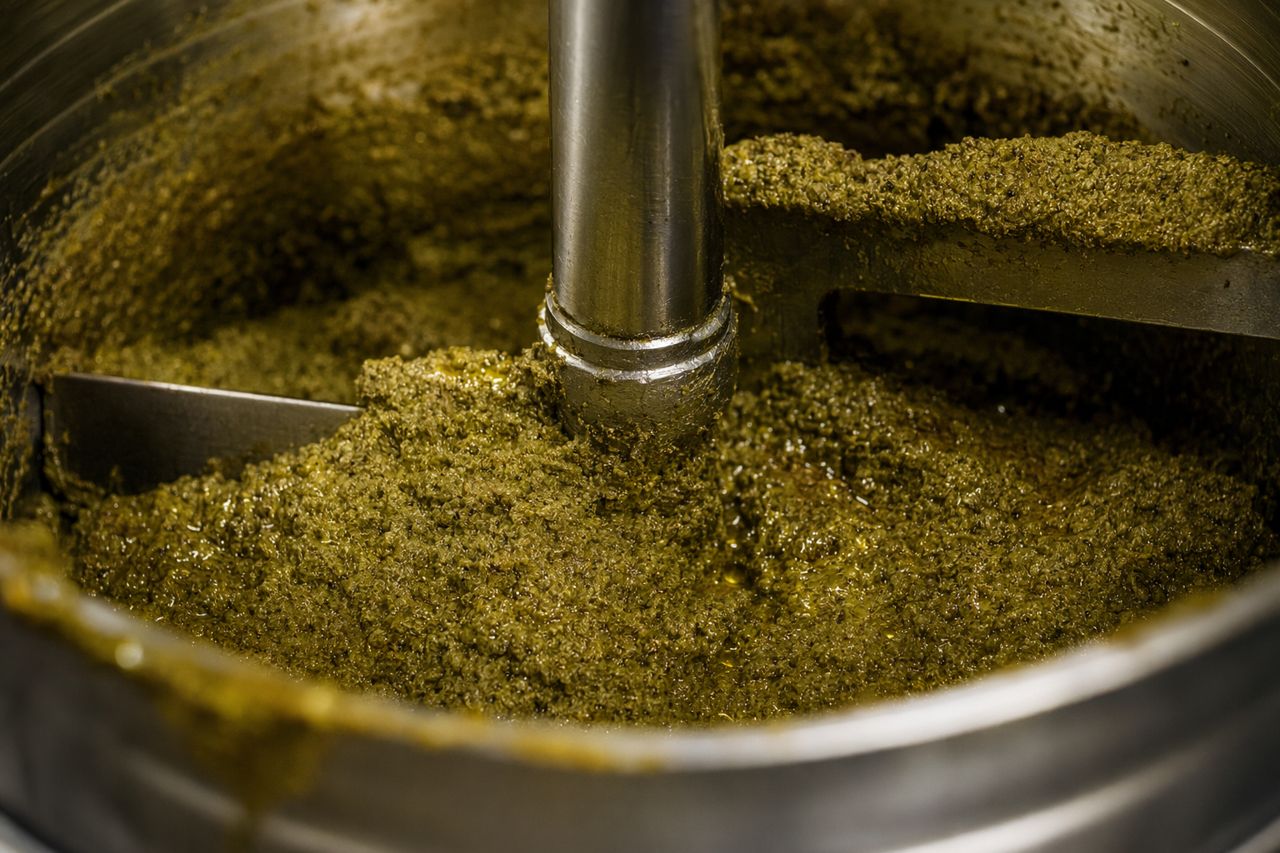
Paste behavior changes through the season. Early fruit may be firm and resistant. Later fruit may soften and form emulsions more easily. Variety, temperature, maturity, frost exposure, and holding time can all change how paste moves through the malaxer and decanter.
Mill-floor signs to watch include:
These issues show up in both two-phase and three-phase mills. The response may differ, but the operational target is the same: make the paste easier to process without compromising oil quality.
In a two-phase line, enzyme use is often focused on improving release from a paste that has limited added water. The value is practical: better paste opening, more predictable oil separation, and less dependence on aggressive mechanical or water-based correction.
Potential operating benefits include:
For two-phase mills, enzyme strategy should be matched carefully to fruit maturity, malaxation time, paste temperature, and decanter response. The aim is a controlled improvement in process behavior, not an unnecessary change to the mill’s normal operating style.
In a three-phase line, the added water can support flow, but it does not automatically solve oil release or emulsion behavior. Enzyme support can help the paste release oil more efficiently before dilution and separation.
Potential operating benefits include:
For three-phase mills, the key is process discipline. Enzyme use should work alongside water management, not replace it. When the line is balanced, mills can often run with greater confidence and fewer corrective changes.
If you are evaluating equipment, upgrading a line, or benchmarking performance, compare the systems through operational questions rather than labels.
What is the local cost and constraint of water use?
Three-phase operation usually carries a higher water demand.
How difficult is wastewater disposal?
Two-phase operation can reduce liquid effluent, while three-phase operation creates more vegetation water.
What pomace handling routes are available?
Two-phase pomace is wetter and may need different logistics.
How variable is incoming fruit?
High variation in maturity, cultivar, or harvest timing increases the need for flexible paste management.
How sensitive is the line to emulsions?
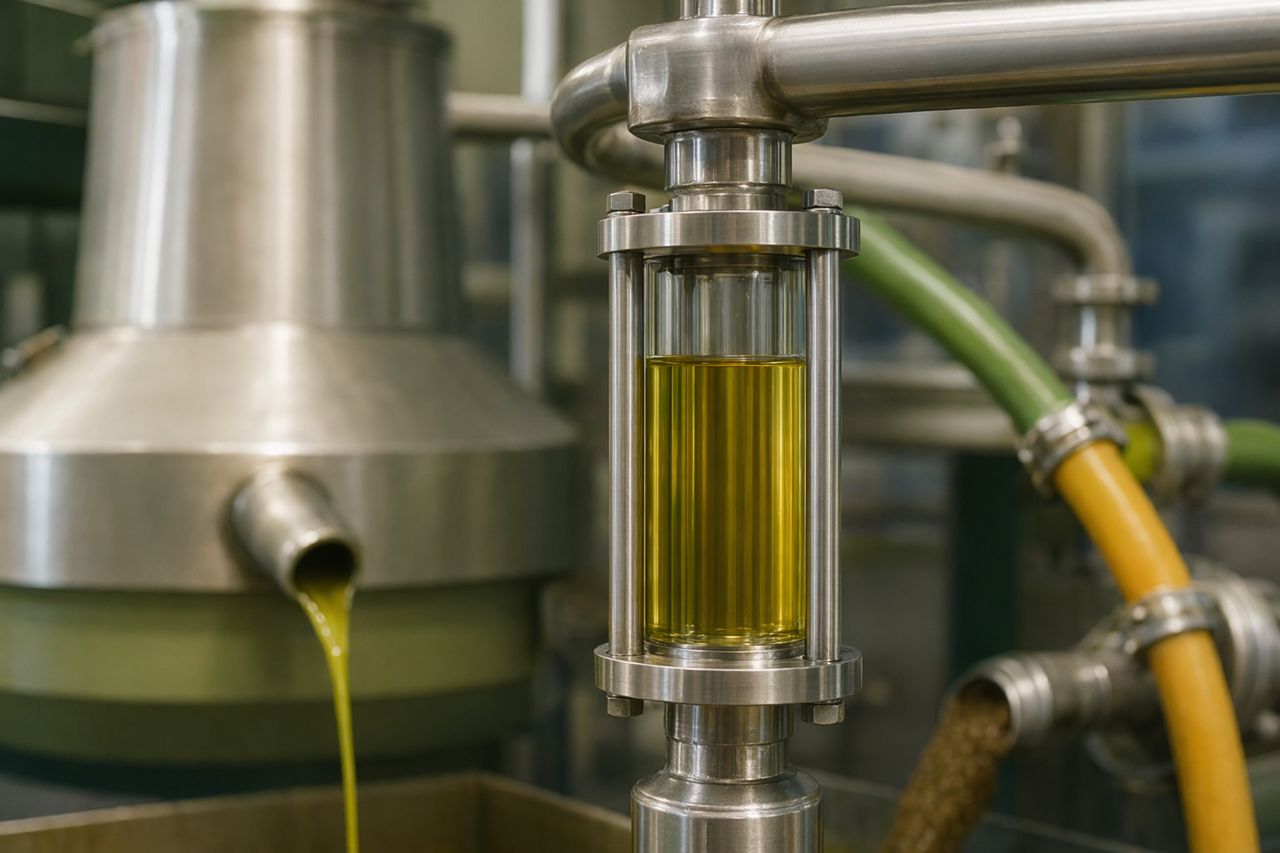
Persistent emulsions can reduce clarity, slow separation, and increase oil loss risk.
How much operator intervention is required during peak intake?
A mill that needs constant adjustment may benefit from better upstream paste control.
Where does value leak from the process?
Look at pomace, wastewater, cloudy oil, decanter stability, and throughput limits.
| Operating factor | Two-phase mill | Three-phase mill |
|---|---|---|
| Process water use | Lower | Higher |
| Liquid effluent | Lower | Higher |
| Pomace moisture | Higher | Lower |
| Paste flow support from added water | Limited | Greater |
| Wastewater treatment burden | Usually lower | Usually higher |
| Sensitivity to difficult paste | Can be higher | Often easier to fluidize |
| Risk from over-dilution | Lower | Higher |
| Enzyme value focus | Paste opening, oil release, cleaner separation | Oil release, reduced carryover, better separation discipline |
Olive oil extraction is a compressed-season operation. When intake is high, small process issues become expensive: slow malaxation response, unstable decanter behavior, oil retained in pomace, cloudy separation, and extra wastewater handling.
A practical enzyme program should help the mill run closer to its intended operating window. That means:
Olivanta works with olive oil mills to align enzyme selection with real process conditions: fruit maturity, crusher setup, malaxation profile, decanter configuration, and waste-handling constraints.
A mill should review enzyme support when any of these issues appear repeatedly:
The right enzyme strategy is not generic. It should be built around the mill’s equipment, crop profile, and commercial targets.
If you operate a two-phase or three-phase olive oil mill and want practical enzyme support for extraction consistency, paste behavior, and separation clarity, contact Olivanta.
Use the on-site request a quote form and tell us your mill configuration, fruit type, current bottleneck, and harvest timing. We will help identify the right starting point for your process.
Tell us your application and volume — we reply with pricing and lead time.